
Active Alabama Warrant Records
Alabama judges and magistrates issue criminal warrants under the rules that govern the case. An arrest warrant rests on probable cause. A bench warrant or capias can follow a missed appearance or failure to obey a court order. Once issued, a warrant may appear in the court docket and in restricted criminal-justice systems. The sheriff or other executing agency handles service and operational status. A clerk's docket, a sheriff's public list, and an officer's system can therefore update at different times.
No official, comprehensive, free Alabama active-warrant portal was verified. ACJIC, NCIC, and Alabama electronic warrant tools serve authorized users, not the public. Public access is local: check the state trial docket where available, ask the circuit or municipal clerk, and consult the official county sheriff. The Alabama county directory routes a search to the place tied to the charge, hearing, or probation matter. Current status still requires direct confirmation.
Online absence is weak evidence. A list may cover one agency, omit city cases, exclude sensitive matters, or lag a recall or service event. Search the location of the event, not only the subject's present home. Repeat the process in each possible jurisdiction.
Types of Alabama Warrants
The label identifies why an Alabama warrant exists and which office can explain it. Read the issuing court's exact term with the case number, charge, date, and status.
- Arrest warrant: authorizes arrest after a judicial probable-cause finding.
- Bench warrant or capias: may issue after failure to appear or other court noncompliance.
- Search warrant: authorizes a defined search and may remain sealed before execution.
- Fugitive warrant or hold: involves another Alabama or out-of-state jurisdiction.
- Probation-violation warrant: concerns alleged supervision noncompliance, not a new conviction.
- Civil or body attachment: can arise in limited contempt or support matters.
Municipal failure-to-appear warrants may remain with a city court and police department. Search warrants tied to an active investigation can remain nonpublic. Alabama sources use “capias” in some settings, but the issuing court's own label controls.
How to Search Alabama Warrants
Gather the full legal name and variants, lawful date of birth, likely county and city, case or citation number, charge, and missed-hearing date. Alabama's paid Just One Look trial-court service may show a warrant or failure-to-appear entry. It omits some municipal matters and is not real-time officer confirmation.
Cross-check the court and executing agency. Clerk staff can identify a known case, but Rule 30(F) does not require broad background searches. Sheriff pages vary: some publish a list or app, while others direct callers to a warrants unit. Confirm official ownership of any site.
- List each county and municipality tied to the charge, arrest, court date, or supervision.
- Search the related trial docket for warrant, capias, or failure-to-appear events.
- Contact the circuit clerk for Circuit or District Court, or the municipal clerk for a city case.
- Check the official sheriff list or warrants contact and match the case, not just the name.
- Ask the issuing office to confirm status, bond, and appearance instructions.
- Request a specific public warrant record if a copy is needed.
Note: A docket entry may lag recall or service, so only the issuing court or agency can confirm operational Alabama warrant status.
Alabama Warrant Search Details
Alabama has no public statewide form from which to claim one universal field set. These inputs support a focused local inquiry. Give sensitive data only to a verified official office.
| Field Label | Type | Required | Notes |
|---|---|---|---|
| Full name | Text | Usually | Include middle name, suffix, aliases, and prior spellings. |
| Case or citation number | Text | No | The strongest key for a court inquiry. |
| Date of birth | Date | Varies | Helps distinguish people when the channel permits it. |
| County and city | Location | Yes | Identifies the likely court and sheriff. |
| Charge or event date | Text/date | No | Helps when the case number is unknown. |
A public office may decline an unlimited background-check request. Ask for a named Alabama warrant, case, and date. A docket sheet can identify the exact paper to order.
What Alabama Warrant Records Show
A court or sheriff result can show the following fields, subject to local practice. Treat it as a snapshot. Bond can change, status can change after service or recall, and a charge remains an accusation unless the case ends in conviction.
| Field | What It Shows |
|---|---|
| Warrant or case number | Identifier used by the issuing court or agency. |
| Subject name | Name attached to the warrant, requiring identity confirmation. |
| Issue date | Date the judicial officer authorized it. |
| Charge or reason | Offense, failure to appear, violation, or stated basis. |
| Issuing court and county | Office controlling the case. |
| Bond amount or type | Published terms, if any, subject to later order. |
| Status and service date | Whether marked active, served, recalled, or changed. |
The public entry rarely includes the full sworn affidavit. The related Alabama criminal court file is the stronger source for the final judicial result.
County Alabama Warrant Lookup
Select the event county in the Alabama county directory. For a state case, find the Circuit Clerk, who maintains Circuit and District files. For a city case, use the municipal clerk. The sheriff controls county execution and any public roster. Available channels include official web pages, counters, phone, mail, and focused record requests.
Federal warrants are separate. The official Northern District, Middle District, and Southern District sources identify federal court services, but none is a public active-warrant portal.
The Northern District of Alabama publishes official federal court information.
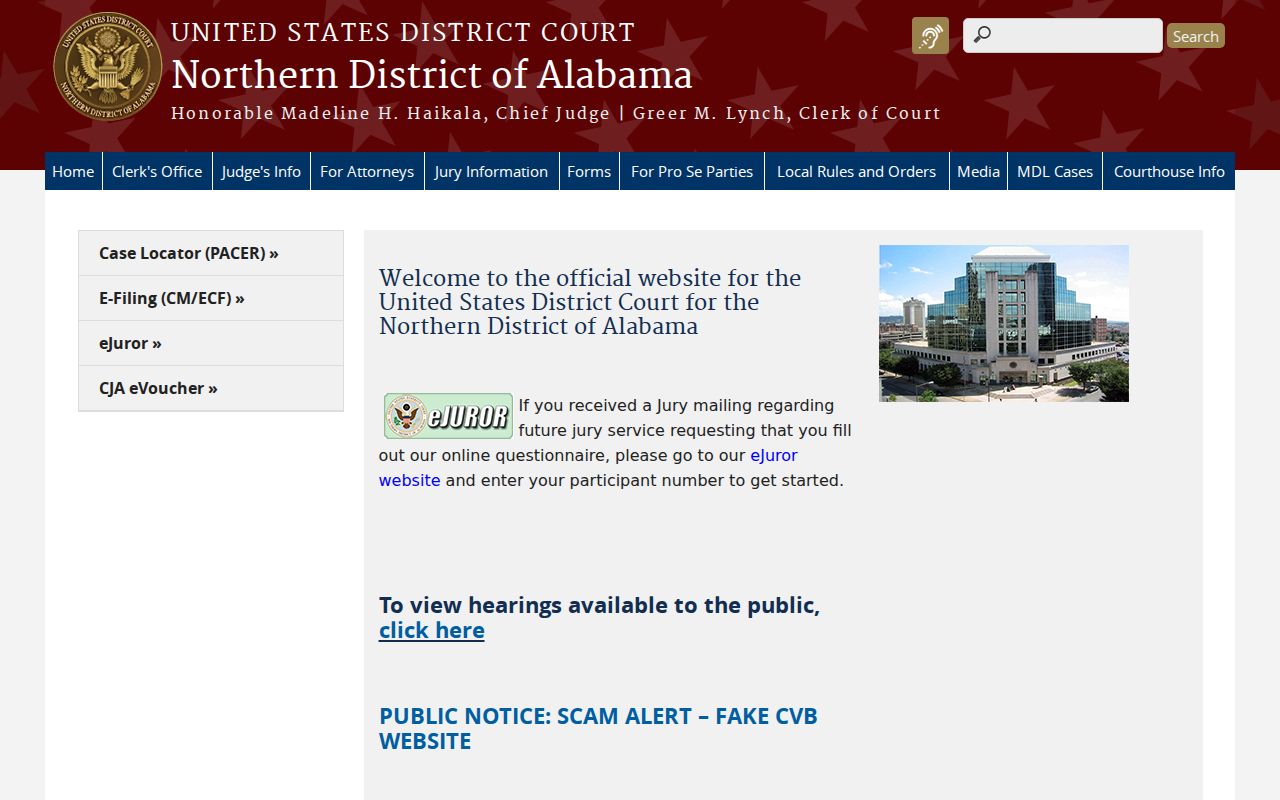
Its site concerns federal cases, not a county Alabama warrant roster.
The Middle District of Alabama supplies that district's official court services.
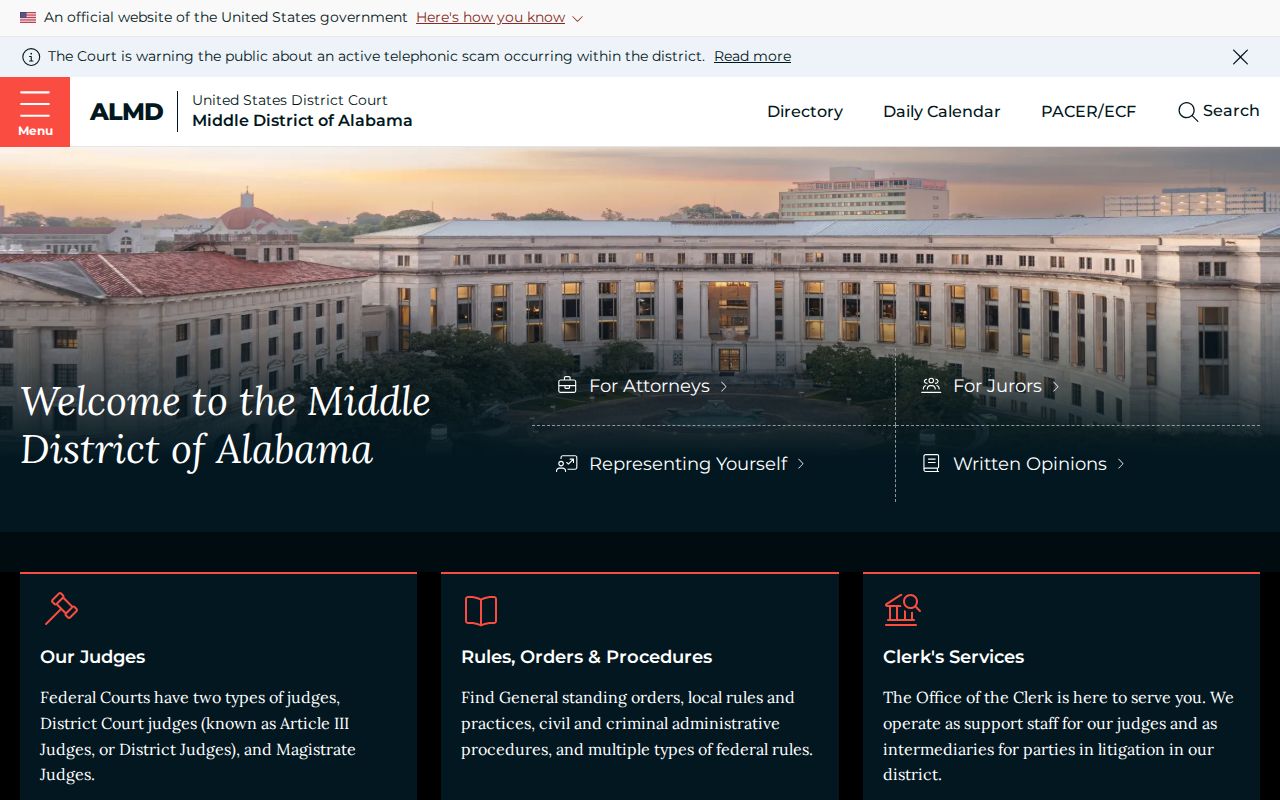
Federal and Alabama state warrant records use different custodians.
The Southern District of Alabama provides its own clerk information.
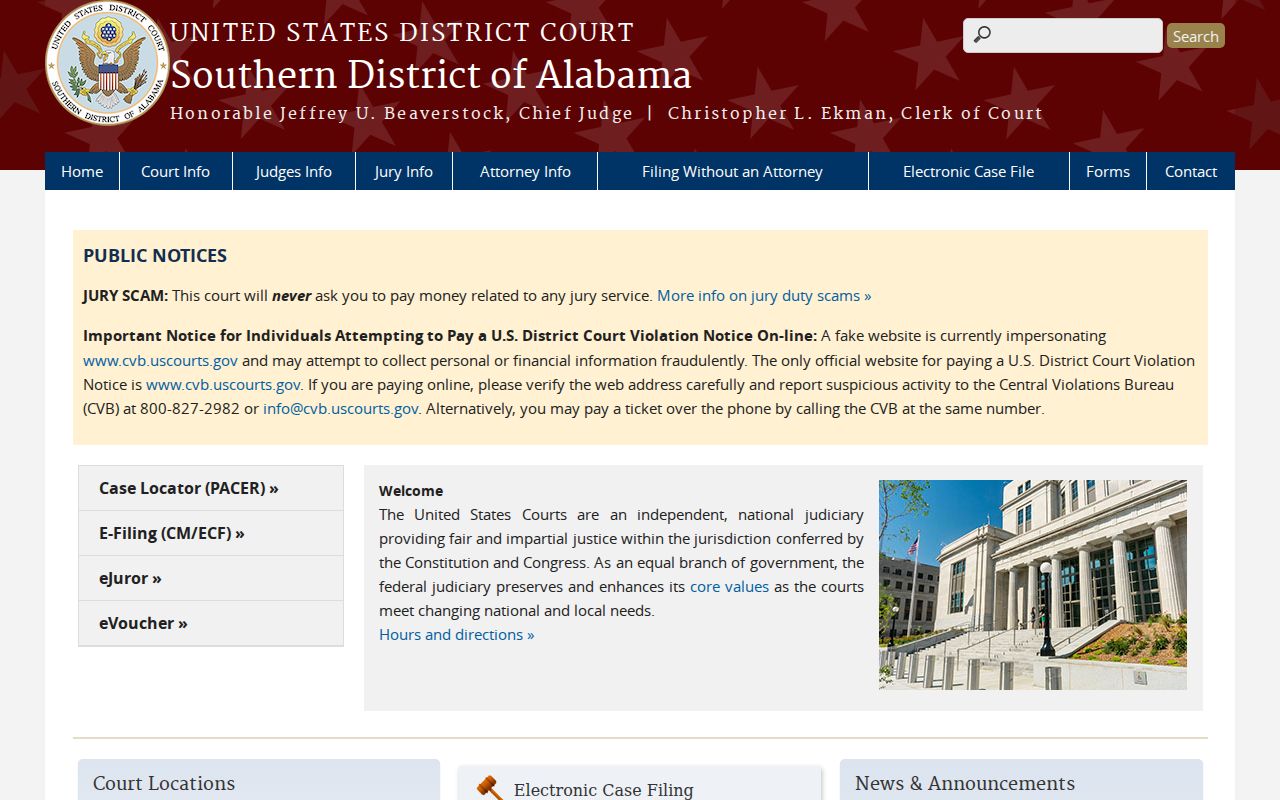
Federal law-enforcement offices control operational federal warrant information.
Resolving an Alabama Warrant
Confirm the issuing court, case, warrant type, and bond. An Alabama defense lawyer can assess a motion to recall, a new municipal setting, a bond hearing, or planned surrender. No outcome is guaranteed. A bondsman can address surety but cannot dismiss a warrant. Do not assume payment alone cancels it.
Follow official instructions. Obtain a receipt or signed order, then verify the docket and agency status. For identity error, work through the court, agency, and counsel rather than sending documents to an unofficial site.
Important: Contacting an issuing agency can result in execution of an active warrant; obtain Alabama legal advice before arranging an appearance or surrender.
Alabama Anonymous Tip Channels
Crime Stoppers and tip programs operate through local or regional agencies. No single Alabama statewide tip line was verified. Use the official sheriff, police department, or named local program. A tip service does not confirm warrant status and is not a surrender or legal-advice channel. Do not confront a wanted person.
Restricted Alabama Warrant Records
Juvenile and Youthful Offender matters are restricted. Search-warrant affidavits may remain sealed before execution or during an active investigation. Grand-jury material, victims, confidential addresses, medical facts, and personal identifiers can be withheld. Sealed or expunged records are not released merely because a requester cites public-record law.
Rule 30 of the Alabama Rules of Judicial Administration preserves free inspection of open court files but excludes sealed, exempt, and restricted records. Alabama's court-record privacy rules direct exclusion and redaction of protected information. Access beyond the public file may require standing, statutory authority, consent, or a court order.
Expungement also changes ordinary access. Alabama Chapter 27 provides specific remedies for eligible charges and a limited class of convictions, subject to exclusions, filing conditions, notice, and court review. An expungement order directs named agencies to segregate or remove records from routine public access, but it does not recall every private copy or erase all criminal-justice uses. A person researching an old warrant should obtain the certified case disposition and determine whether an order covers the issuing court and agency.
A public-record request should describe an existing document instead of demanding a statewide background search. Give the Alabama case number, subject, issuing court, approximate date, warrant type, and desired paper or electronic form. Ask for an estimate if copying, certification, archive retrieval, research, or postage is involved. If the office withholds part of the file, request the public docket and any segregable portions. The Attorney General's open-government material offers general guidance but does not become the custodian and cannot order a judge to unseal a court record.
Note: Ask for the public docket and segregable portions when an attachment is restricted, and request the custodian's authority for any denial.