
What Alabama Probate Covers
Alabama Probate Courts admit wills, appoint executors or administrators, issue letters, receive claims, supervise estate accounting and settlement, and address guardianships and conservatorships. They also handle name changes, marriage-certificate recording, adoptions, commitments, and other locally assigned functions. Local laws give some Probate Courts broader equity jurisdiction, so the exact procedure can differ.
The probate judge is separate from the circuit clerk. Start with Probate Court for the estate opening and letters, even when a later contest, removal, appeal, or equity issue reaches Circuit Court. The Alabama county directory identifies the correct county route.
A will is not self-executing. The Alabama Probate Court must determine the filing, appointment, and issuance of letters. Testate administration follows a valid will while preserving statutory family and creditor rights. Intestate administration follows Alabama heirship law. A handwritten or copied paper may raise validity questions that clerk staff cannot decide informally. A contest can create linked Circuit Court and appellate records, so a complete search may follow the docket beyond the original probate case.
Alabama Probate Terms Defined
These terms identify the people, authority, and property that appear in an Alabama estate or protective proceeding.
- Testator
- A person who made a will.
- Executor or personal representative
- The person appointed to administer the estate and act under court-issued authority.
- Intestate
- Dying without a valid will, so Alabama succession law directs distribution.
- Letters testamentary or administration
- Certified court authority to act for the estate.
- Guardianship
- Authority concerning a protected person's care and personal decisions.
- Conservatorship
- Authority concerning a protected person's money and property.
- Inventory and accounting
- Reports of assets, receipts, expenses, claims, and distributions.
Search Alabama Probate Records
There is no verified comprehensive Alabama probate-case portal equivalent to Alacourt. Search the county index or contact the office. Useful fields include decedent or protected-person name and variants, date of death or birth, approximate filing year, county, case number, case type, representative, attorney, and requested document.
County results can display the case number, estate name, open and close dates, judge, personal representative, attorney, events, and images. Images may require payment or counter access. Search alternate spellings and a spouse's name when the decedent search fails. For an old file, ask which archive or index covers the year, the retrieval schedule, and the search or copy cost. Offering a maximum budget and requesting the docket first helps select the exact documents.
- Identify the domicile or property county and whether an original will exists.
- Open that county's Probate Court index or contact the counter or records office.
- Search name variants, estate or case number, type, and filing range.
- Review the docket for opening, letters, claims, accounting, and final settlement.
- Order the particular will, letters, or order in plain or certified form.
Alabama Probate Court Locations
Each of Alabama's 67 counties has a Probate Court, but addresses, staff, local indexes, image access, and mail practices differ. Search the county where the decedent lived or where the estate opened. Real property or ancillary issues can create another proceeding.
Find the right Probate Court: Browse the directory of all 67 Alabama counties, then confirm the court's current search and copy channels.
The official Mobile County Probate Court site illustrates local Alabama probate access rather than statewide coverage.
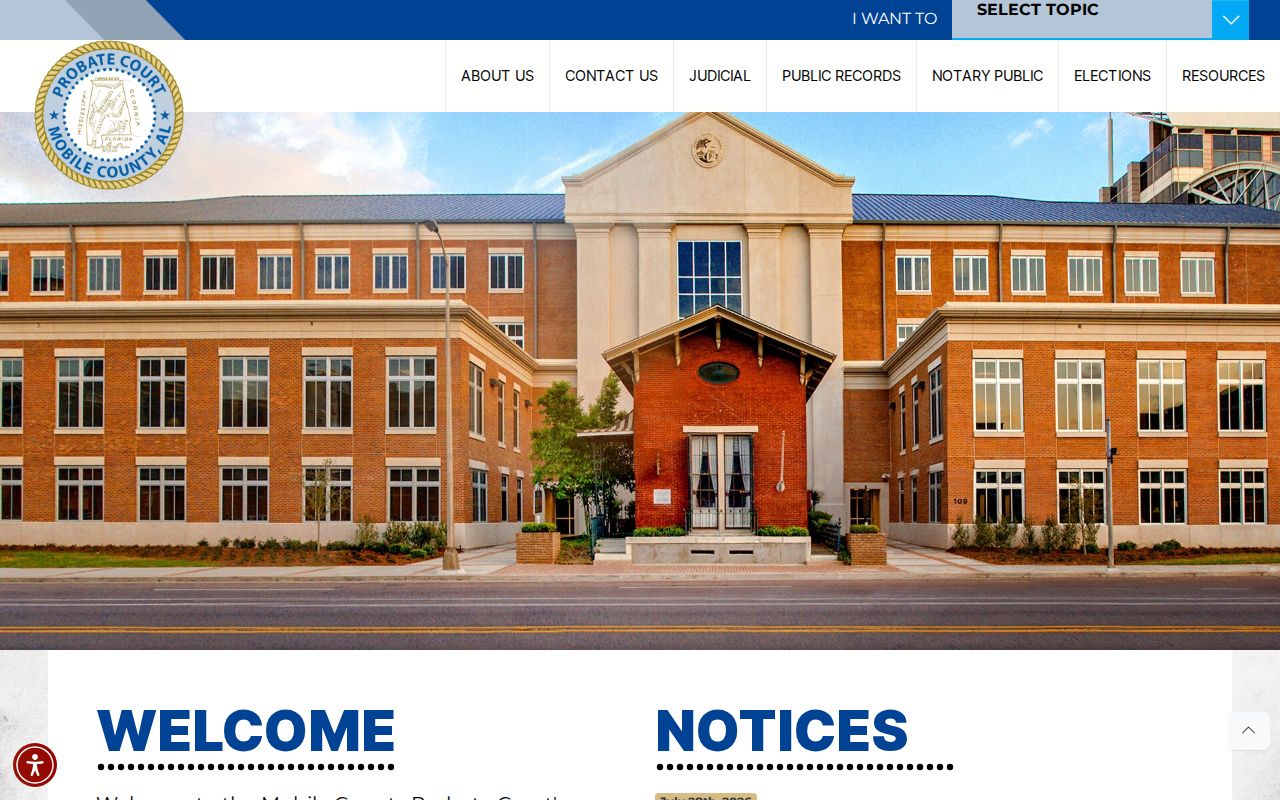
Its features apply to that county only, so another estate must be routed to its own Probate Court.
Alabama Probate Filing Fees
Alabama probate totals combine statutory, county, recording, publication, service, bond, copy, and local components. Ask the specific office for an itemized current estimate. Hardship relief may affect court costs but not every newspaper, bond, notary, or professional charge.
The opening charge is only one part of the total. Certified letters, extra copies, creditor publication, sheriff service, a representative bond, recording, guardian ad litem work, and later filings can add costs. A marriage-certificate recording fee is not an estate-opening fee. Quote the office and date with any estimate because local acts and outside-provider charges can change.
| Item | Amount |
|---|---|
| Estate opening petition | Confirm county total |
| Certified letters | Confirm copy and certification charge |
| Publication and service | Varies by case and provider |
| Bond premium | Varies when required |
| Guardianship or conservatorship | Confirm filing and appointed-professional costs |
What Alabama Probate Records Show
An estate docket can show the petition, lodged will, heirs or devisees, notice, hearing, bond, order, letters, inventory, creditor claims, sale or instruction petitions, accountings, settlement, distribution, and discharge. Results may show case number, estate name, dates, judge, representative, attorney, events, and images. “Opened” does not mean closed, “claim filed” does not mean allowed, and a lodged will is not necessarily admitted.
Certified letters, not the will alone, usually prove authority to a bank. A representative is a fiduciary who must safeguard property, address claims, account, and distribute under the will or intestacy law. Alabama small-estate summary distribution requires current statutory conditions and an adjusted value threshold, so the court should confirm the current form and amount.
Estate administration generally moves from petition and notice to appointment, collection of assets, creditor handling, accounting, distribution, and discharge. Creditor deadlines and administration constraints must be calculated from the actual appointment and publication. Premature distribution can expose the representative. Assets outside probate, homestead or family allowances, spousal rights, taxes, property sales, missing heirs, and disputed claims can extend the case. There is no reliable statewide completion promise.
Guardianship and conservatorship are different. A guardian addresses care and personal decisions; a conservator handles money and property. A petition may lead to service, capacity evaluation, appointed representation, hearing, bond, reports, and accountings. Courts consider due process and less restrictive alternatives. Emergency appointments follow different proof and duration rules, and sensitive evaluation material may not be publicly available even when the docket shows that it was filed.
Open Alabama is a state transparency portal, not an Alabama probate case search.
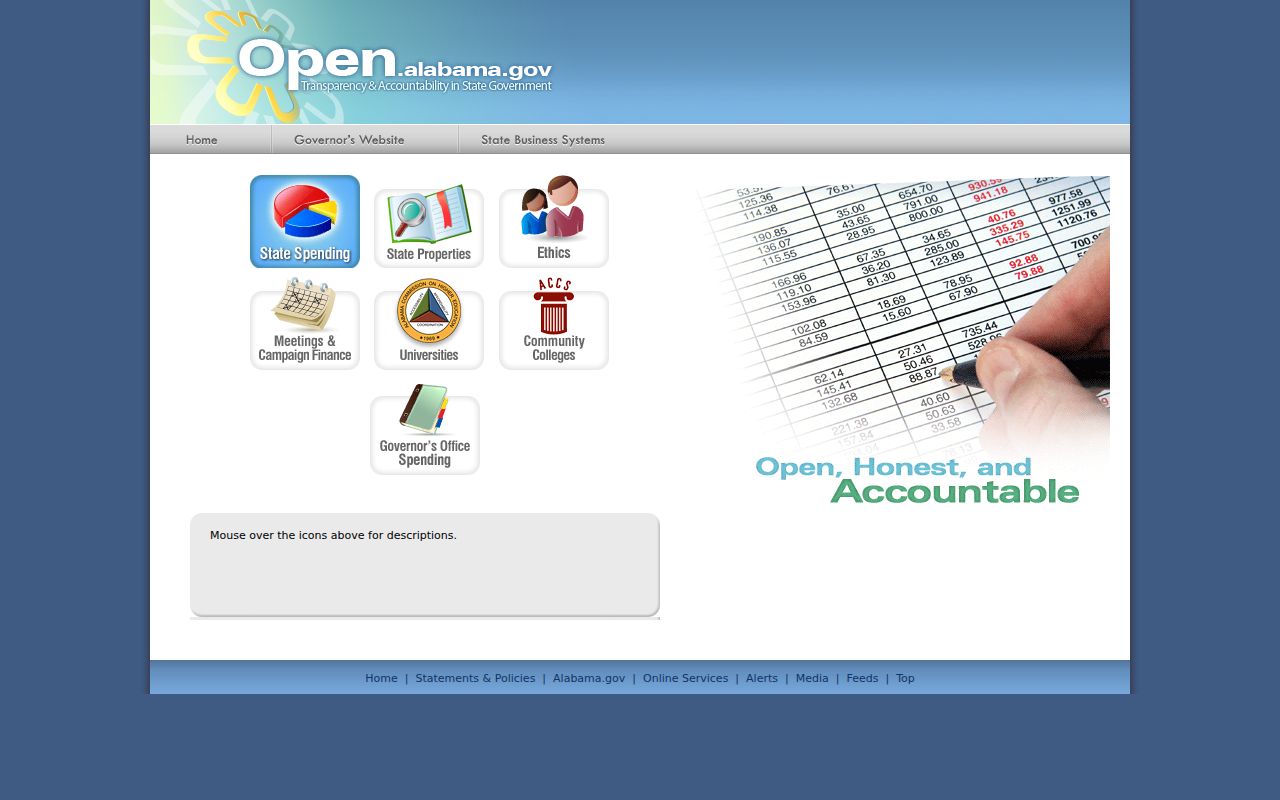
Use it for its stated transparency purpose, not to replace the county Probate Court index.
Restricted Alabama Probate Records
Adoption files and mental-health commitment material are restricted. Guardianship and conservatorship files can contain protected capacity, medical, minor, and financial facts. Social Security numbers, accounts, and other personal identifiers are redacted. Request the public docket and segregable public documents rather than assuming the whole matter is open or closed.
Access to protected material may require statutory standing or a court order. An index entry does not authorize release of a confidential evaluation or attachment. Court-record privacy rules and the specific probate statute control.
Ordinary estate administration is substantially public, but that does not make every account number, tax paper, health record, or minor's fact available online. Ask for a redacted copy. Adoption records and original birth materials use their own statutory access path. Commitment petitions, evaluations, and treatment facts cannot be obtained through an ordinary estate-record request. A requester should identify the precise document and explain any legal entitlement without demanding that staff give legal advice.
Find Any Alabama Probate Court
Browse the full directory of all 67 Alabama counties to reach the Probate Court for an estate, guardianship, conservatorship, name change, or recorded marriage certificate. Ask about online, counter, mail, certified-copy, and archive access. Include the full name, variants, approximate year, case type, known number, requested docket document, delivery method, and maximum cost.
Before relying on an Alabama probate result, read its procedural status. “Letters issued” identifies the representative authorized at that point. “Inventory filed” says only that a report reached the court. “Final settlement” and “discharge” are stronger signs of closure, though later litigation can still create a linked record. When title, inheritance, authority, or a deadline matters, obtain a current certified order or letters from the Probate Court rather than treating an index screen as legal proof.
A focused mail request should identify the decedent or protected person, all known name variants, approximate filing year, county, case type, representative, and requested docket item. State whether a plain or certified copy is needed, provide a return method, and ask for an estimate before the office exceeds a set amount. For an estate involving another state or Alabama real property outside the domicile county, ask whether an ancillary proceeding created a second local file. The Probate Court can confirm its record and procedure but cannot advise an heir how to litigate a claim.