
Alabama Criminal Court Case Files
An Alabama criminal court record begins when an accusation is filed in a court. It is distinct from the police report, jail booking, prosecutor work file, and ALEA criminal history. The judicial file shows what was alleged in court and what the judge ultimately did. It may contain a complaint or indictment, warrant return, counsel appointment, bond entries, motions, plea, trial events, sentence, probation action, and appeal.
The earlier booking and accusation trail is covered by Alabama arrest records and court charges. Current confinement is a separate custody question answered through Alabama inmate records, not by the criminal docket alone.
District Court handles misdemeanors, initial appearances, preliminary felony matters, and state traffic assigned there. Felonies generally move through the grand jury into Circuit Court. Municipal Court hears city ordinance cases and many city traffic matters. Alabama's county Circuit Clerk keeps both Circuit and District records, while a municipal clerk keeps the city's docket. That terminology matters: Alabama does not elect a separate county district clerk.
Find Alabama Criminal Court Records
Just One Look offers paid, case-by-case access to Alabama trial records, while Alacourt provides paid subscription access. Both can surface Circuit and District criminal details and available images. They do not promise every municipal case, sealed matter, or older paper document. The county Circuit Clerk remains the source for authoritative and certified documents.
- Identify the county, court, and approximate filing date. Use the case number as the first search key.
- When searching a name, try complete legal and former names, then verify county, age context, and party role.
- Open the case and distinguish original charges from amended or final charges.
- Read the events through plea or trial, disposition, sentence, and any appeal.
- Request the docket sheet and selected certified documents from the correct clerk.
If the Alabama trial search finds nothing, check the named Municipal Court and ask about archival retrieval. A result can be missing because the name is indexed differently, the case is local, the record is confidential, or the image remains on paper. Absence is not a no-record certification.
Alabama Criminal Case Stages
Each Alabama stage leaves a different docket trace. Arrest and booking come first as agency records. Initial appearance addresses identity, rights, counsel, and release. A felony may then have a preliminary event before grand-jury action and Circuit Court arraignment. Discovery usually passes between the parties and is not public unless filed.
Case flow: Charges Filed › Arraignment › Pretrial / Motions › Plea or Trial › Disposition › Sentencing
- Charges filed
- A complaint, indictment, or authorized information identifies counts and statutes alleged.
- Arraignment
- The court states the charge and records an authorized plea.
- Pretrial and motions
- Settings and rulings can address bond, suppression, dismissal, evidence, and continuances.
- Plea or trial
- The case resolves through dismissal, negotiated plea, acquittal, or conviction.
- Disposition and sentence
- Orders state the result and any incarceration, suspended term, probation, fine, restitution, or costs.
The official Alabama criminal procedure rules supply the framework for these events.
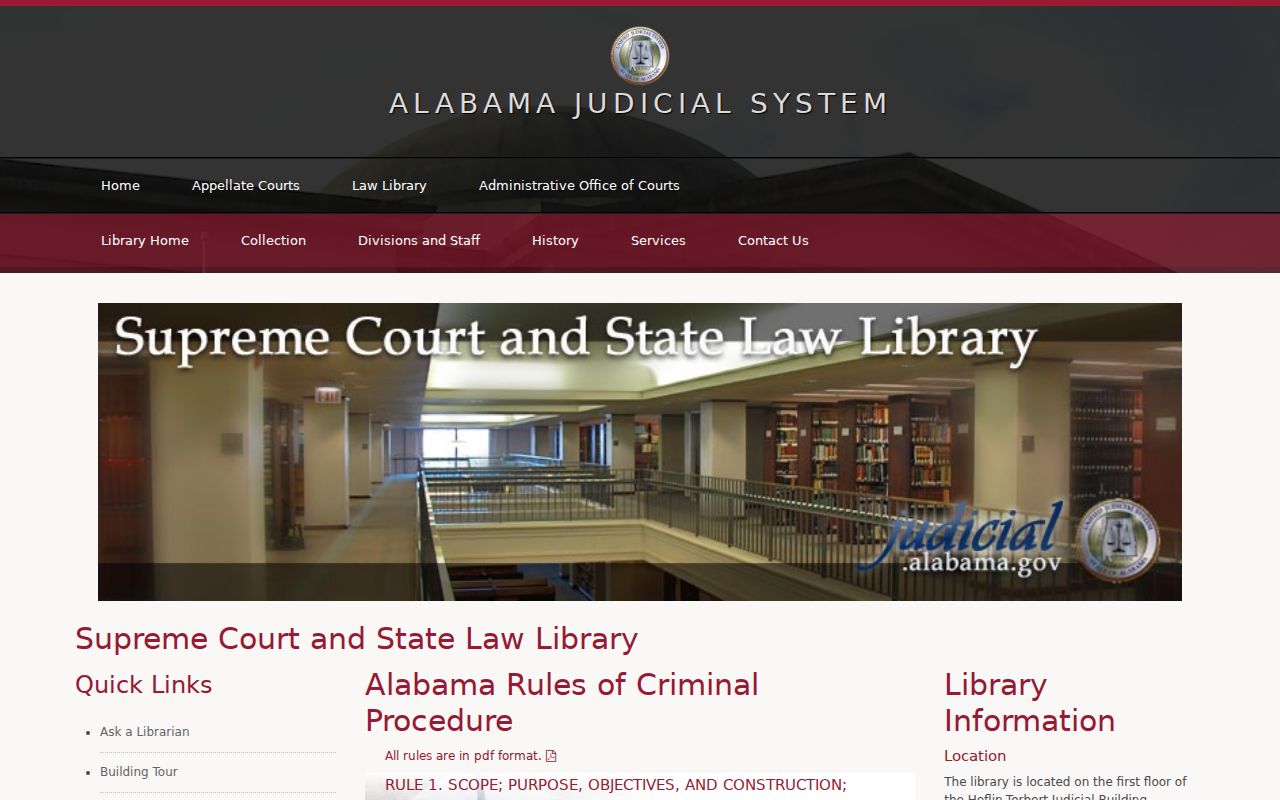
The rules help explain why a docket event has a legal role, but the signed order controls the result in the individual case.
What Alabama Criminal Records Show
Alabama criminal court fields track one prosecution. Exact layouts differ, and protected identifiers are redacted. The final charge may differ from the complaint or booking label, so compare count-by-count dispositions.
| Field | What It Shows |
|---|---|
| Case number and court | Identifies county, Circuit or District context, case type, year, and sequence. |
| Defendant and counsel | Names the accused and attorney, with sensitive identifiers protected. |
| Charges and counts | Lists description, code, class, offense date, and any amendment by count. |
| Bond and settings | Records release terms and scheduled appearances where docketed. |
| Plea and motions | Shows formal response and filed requests or rulings. |
| Disposition | States dismissal, nolle prosequi, acquittal, conviction, or another outcome. |
| Sentence | Shows incarceration, probation, fines, restitution, costs, and related orders. |
| Appeal | Identifies notice, record transfer, and linked appellate proceeding. |
Alabama Charges vs. Convictions
A charge is an accusation. It is not a finding of guilt. An Alabama criminal file can show a charge that was dismissed, no-billed, nolle prossed, amended, or resolved by acquittal. Those events remain part of the docket unless a valid restriction or expungement applies. Report the original and final charge separately when accuracy matters.
| Charge | Conviction | |
|---|---|---|
| Stage | Accusation | Verdict or plea |
| Meaning | Filed allegation by authorized process | Adjudication of guilt by plea or verdict |
| Possible next event | Amendment, dismissal, plea, or trial | Sentence, post-judgment motion, or appeal |
| Proof | Charging instrument and docket | Signed judgment and sentencing order |
Read Alabama Criminal Dispositions
“Dismissed” ends the pending count subject to the order's terms. “Nolle prosequi” means the prosecutor chose not to proceed at that time. “No bill” means the grand jury declined to indict. “Not guilty” or “acquitted” follows adjudication. “Guilty” can result from a plea or verdict. Do not import another state's “adjudication withheld” label into an Alabama file unless the actual entry uses it.
Sentence terms may be active, suspended, split, concurrent, or consecutive. Read the written order rather than calculating punishment from the felony or misdemeanor class alone. Probation is court-supervised community placement and differs from parole. Costs, restitution, and fines also have different purposes. A portal balance may not reflect every payment or outside agency obligation.
Sealed and Expunged Alabama Records
Sealing and expungement are legal processes, not informal clerk corrections. A sealed Alabama document or case is withheld from ordinary public view under a rule or order. Chapter 27 expungement requires eligibility analysis, a sworn Circuit Court petition, certified records, notice to named agencies, and applicable costs or approved hardship papers. Dismissal alone does not remove the public docket.
| Sealed | Expunged | |
|---|---|---|
| Public visibility | Blocked as the order or rule directs | Removed or segregated from ordinary access as Chapter 27 directs |
| Official access | Possible for authorized persons or uses | Limited criminal-justice and statutory uses can remain |
| How obtained | Governing confidentiality law or court order | Eligible petition and judicial order in Circuit Court |
| Private copies | Not automatically recalled | Not automatically erased from news or private archives |
After an expungement order, agencies may need time to implement it. Obtain a certified order, verify the court display, and follow the ALEA challenge route if repository data remains wrong. A pardon is a different clemency action and does not automatically erase the case.
Public Alabama Criminal Court Records
Alabama law generally permits inspection of open judicial files, but it does not expose every criminal document. Ala. Code §36-12-40 supplies the public-writings framework. Rule 30(I) of the Alabama Rules of Judicial Administration preserves free inspection of open court files at the clerk's office. Copies, certification, archive retrieval, and permitted research may cost money.
Key Statutes:
Rule 30 keeps open court files available for inspection while excluding sealed, exempt, and restricted records.
Alabama's privacy rules identify protected information and access procedures effective January 1, 2025.
Ask for a narrow set of documents by case number, title, and docket date. Grand-jury evidence, presentence reports, victim details, and unfiled discovery are not ordinary public attachments. A requester denied access can ask which statute, rule, or order controls and whether a redacted portion can be released.
Alabama Statewide Criminal History
The ALEA Criminal Records Identification Unit maintains fingerprint-linked arrest and disposition information in the Alabama Criminal History Repository. This compiled CHRI can reveal events from more than one county, but it is not a certified copy of each complaint, motion, or order. A county docket may be more current for the outcome if disposition reporting is incomplete.
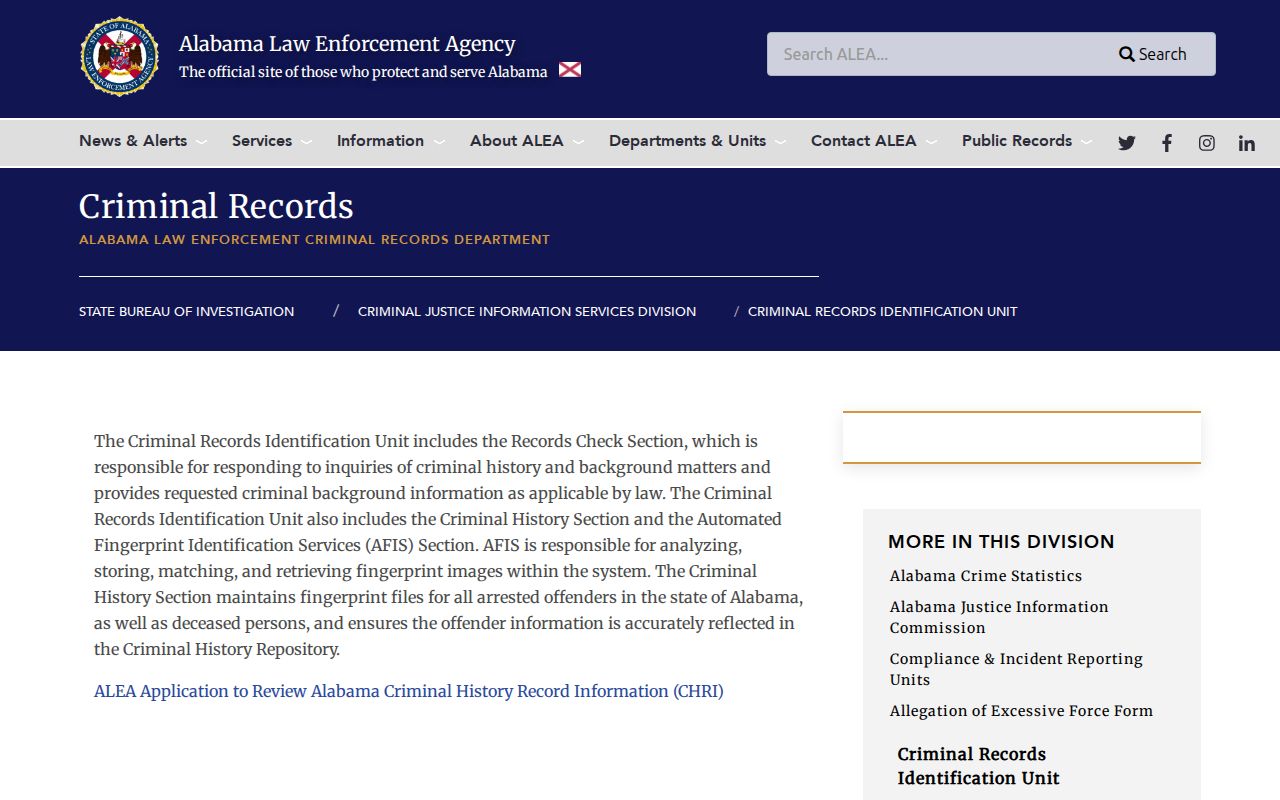
The repository reporting chain depends on fingerprints, agency identifiers, and court disposition submissions, so a missing or mismatched event may need review and correction.
An individual can request personal CHRI through ALEA's review and challenge process with fingerprints, current photo identification, and a $25 payment, plus $5 for each simultaneous additional copy. The secure employer-facing Alabama Background Check service is limited to qualifying employers and is not an anonymous public search.
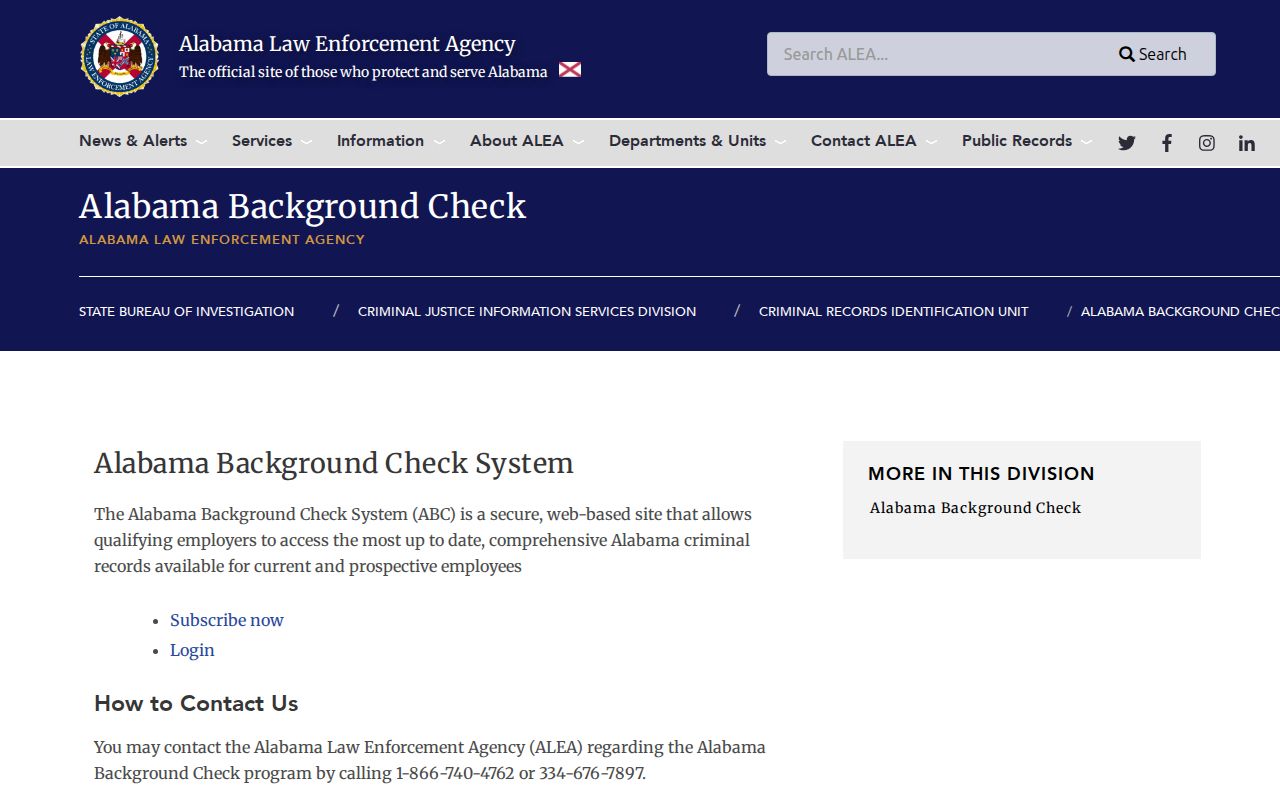
Formal employment, credit, housing, and other consumer screening also carries federal Fair Credit Reporting Act duties that do not attach to casual source-record review.
Important: These records are not a consumer report and may not be used for an FCRA-regulated employment, credit, or housing decision.
Restricted Alabama Criminal Records
Juvenile files are confidential under Ala. Code §12-15-133. Youthful Offender treatment is also protected and is not an ordinary public conviction. Grand-jury proceedings, sealed warrant affidavits, victim and minor details, full identifiers, medical information, and presentence reports are restricted. An index entry can remain public while its attachment is withheld or redacted.
The ALEA sex-offender registry is another distinct system limited to qualifying public disclosures.
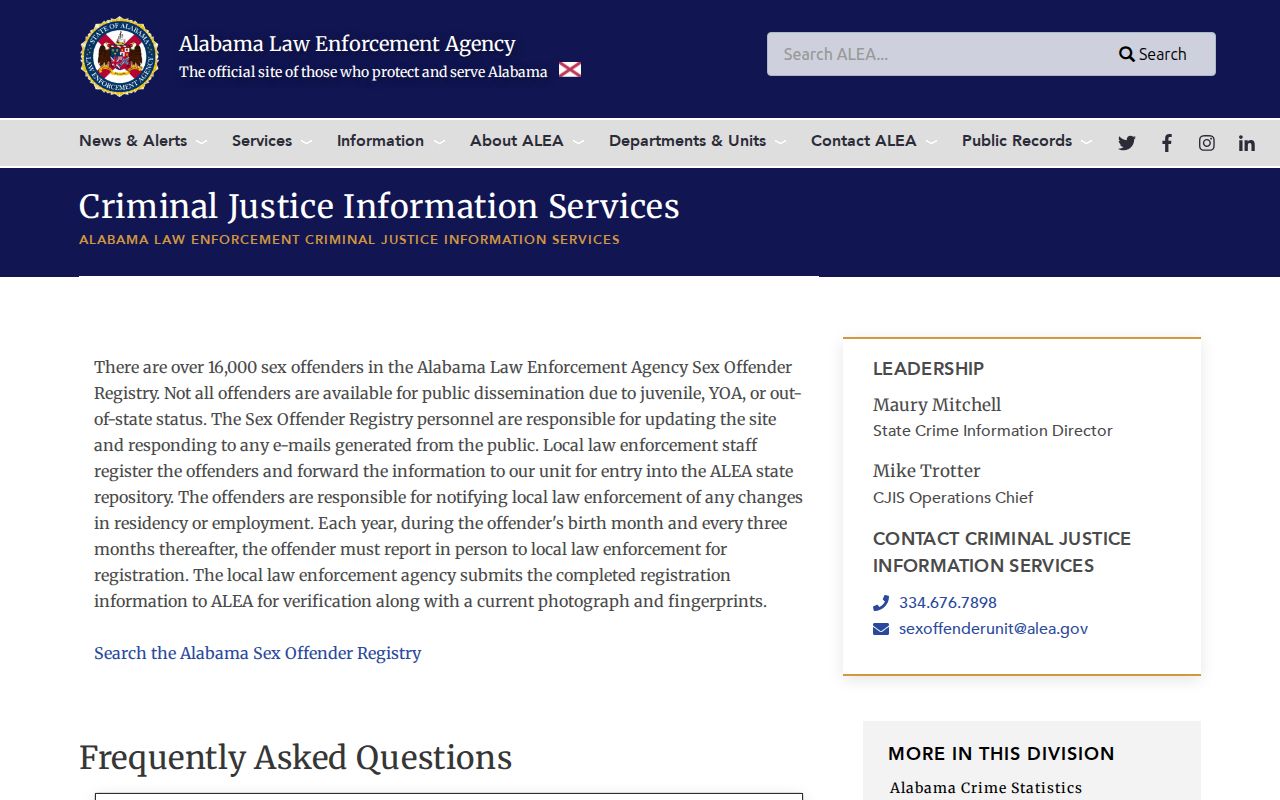
The registry is not a general criminal-history search, and absence from it does not prove that no Alabama criminal case exists.
To obtain the source case, use the Alabama county directory and choose where the charge was filed. Request Circuit or District records from that county's Circuit Clerk, and municipal records from the city clerk. Bring the case number, defendant name, approximate year, document title, and certification requirement. Amounts checked August 11, 2026; verify current access charges with the official office.